Review: Clover N Rays Sliding Drawer Box
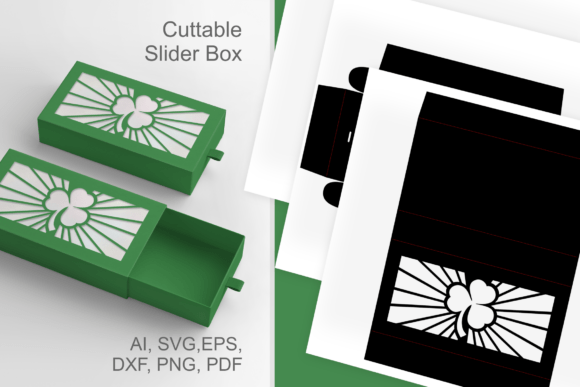
As a designer who has spent years digitizing patterns and testing embroidery files for real-world production, I have learned that the gap between a digital preview and a stitched reality is often where projects succeed or fail. When I first encountered the Clover N Rays Slive N Drawer Favor Box, my initial reaction was one of cautious curiosity. The description highlights it as a paper-cut template for a two-part sliding drawer favor box featuring clover and ray decorative holes. For those of us in the embroidery community, this immediately raises questions about translation. How does a design intended for laser cutting or die-cutting translate into thread? Can this 3D SVG concept truly enhance an embroidery project, or is it strictly a structural guide?
In this review, I am evaluating this asset not just as a graphic, but as a potential component in a broader craft business strategy. Whether you are an Etsy seller looking to elevate your packaging or a hobbyist creating personalized gifts, understanding the practical application of such designs is crucial.
First Impressions and Design Mood
The visual personality of the Clover N Rays Slive N Drawer Favor Box leans heavily into themes of luck, nature, and delicate craftsmanship. The inclusion of clovers suggests a springtime or St. Patrick’s Day vibe, while the ray motifs add a sense of warmth and celebration. As a Shapes category item, the geometry is clean and structured. For an embroidery designer, this clarity is vital. Complex, muddy shapes often result in poor stitch definition, especially when scaled down.
The mood created here is one of thoughtful presentation. It feels boutique-ready. If you are branding a small shop product, using elements that mimic high-end paper crafts can significantly boost the perceived value of your handmade product. However, because this is described as a paper-cut template, we must approach it with a digitizer’s eye. The "holes" mentioned in the description are negative space. In embroidery, negative space is either left as bare fabric or filled with a contrasting background. This design challenge is where creativity meets technical skill.
Real-World Application in Embroidery
Let’s consider a realistic scenario. Imagine you are preparing a custom order for a bridal shower. You want to create a cohesive gift set that includes an embroidered tote bag and a small favor box for candies. While the Clover N Rays Slive N Drawer Favor Box is primarily a structural template for the box itself, the decorative motifs—the clovers and rays—are perfect candidates for adaptation into an applique design or a standalone machine embroidery design on the accompanying textiles.
For custom apparel, such as a linen apron or a cotton tote bag design, these motifs can be digitized using a combination of satin stitch for the outlines and fill stitch for the larger clover leaves. The rays, being thinner, might require a precise running stitch to maintain clarity without becoming too dense. If you are selling digital embroidery file packages, offering this motif as a bonus element alongside the box template could be a strong selling point for creative entrepreneurs who want matching decor.
When applied to sweatshirt embroidery, the texture of the fleece requires careful handling. A design with intricate cut-out details might get lost in the pile of the fabric. In this case, simplifying the ray details and increasing the stitch density slightly can help the design pop. For baby embroidery on onesies or burp cloths, the softness of the theme fits perfectly, but you must ensure that no small, loose threads remain near the "holes" or cut-out areas to ensure safety and durability.
Technical Considerations and Fabric Choices
Working with a design derived from a paper-cut template requires specific attention to fabric texture and stability. Since the original concept relies on physical cut-outs, translating this to embroidery means you are essentially stitching around voids. This works best on stable, woven fabrics like cotton, linen, or canvas. Avoid using this style on highly stretchy knits unless you use a very sturdy stabilizer and perhaps frame the design within a solid border to prevent distortion.
Hoop size is another critical factor. If you are attempting to stitch the entire box pattern or large sections of it, you will need a large hoop, such as a 5x7 or 6x10 inch frame. However, most home machines are limited to 4x4 or 5x7 hoops. Therefore, it is wise to break the design into smaller components. Use the clover motif for embroidered patch creation or as a accent on caps and hats. The curved surface of a cap demands simpler designs; the clover shape is robust enough to handle this curvature if digitized with proper pull compensation.
Color selection plays a massive role in the success of this design. On dark fabric, light thread colors will highlight the clover and ray shapes effectively. Conversely, on white or light fabrics, you might choose tonal threads for a subtle, elegant look, or bold contrasts for a playful aesthetic. Always test your embroidery file on scrap fabric first. Check how the stitch density affects the drape of the material. Too many stitches in the ray details could cause puckering, ruining the clean lines essential to this aesthetic.
Enhancing Brand Value and Customer Trust
For commercial embroidery professionals, consistency is key. Using a cohesive design language across your finished product and its packaging builds brand recognition. If you use the Clover N Rays Slive N Drawer Favor Box structure for your packaging and echo the clover motif in your logo or product embroidery, you create a unified unboxing experience. This level of detail fosters customer trust and encourages repeat business.
When creating printable mockup images for your online store, ensure that the digital representation matches the stitched reality. Misleading previews can lead to refunds and negative reviews. Show close-ups of the stitch quality, especially around the detailed corners of the clovers. Highlight the cleanliness of the backside of the embroidery, as this speaks to your professionalism. Buyers of personalized gift items often inspect the craftsmanship closely; neat trimming and proper tension are non-negotiable.
Practical Designer Notes
Before committing to a large production run or listing this as a core part of your design assets, keep these practical tips in mind:
- Test on Scrap Fabric: Always run a test stitch-out to check for thread breaks or nesting issues, particularly in the tighter curves of the clover leaves.
- Check Licensing: The product description mentions it is a paper-cut template. Verify if the license allows for commercial use of the derived embroidery designs. Some creators restrict the use of their SVGs for resale as digital files but allow finished physical products.
- Contrast is Key: Ensure there is sufficient contrast between the thread and the fabric. Low contrast can make the intricate ray details disappear.
- Stabilizer Selection: Use a cut-away stabilizer for garments that will be washed frequently, such as kitchen towel sets or holiday embroidery decorations that might be stored and reused.
- Scale Appropriately: What looks good on a screen may be too small to stitch clearly. Scale up the motifs if necessary to maintain stitch integrity.
In conclusion, the Clover N Rays Slive N Drawer Favor Box offers a charming aesthetic that, when adapted thoughtfully, can enhance a variety of embroidery projects. It is not just a box template; it is a source of inspiration for motifs that can elevate small business merchandise and boutique branding. By paying attention to technical details like stitch density, fabric choice, and hoop size, you can transform this digital asset into a tangible, high-quality product that delights customers and strengthens your brand identity.